A damaged shop front can disrupt business without warning. Whether caused by vandalism, accidental impact or a break-in, broken glazing creates immediate safety and security risks. It can also prevent customer access, expose stock to damage and result in lost trading hours.
Professional emergency shop front glazing helps retailers deal with these problems quickly through damage assessment, safe glass removal and suitable repairs or temporary protection. Depending on the damage and availability of replacement materials, some businesses may be able to reopen on the same day.
Why Damaged Shop Front Glazing Needs Immediate Attention
Shop front glazing protects merchandise, maintains security and provides a safe environment for customers and employees. When glass breaks, these essential functions are affected.
Shattered glass can cause injuries, while damaged windows leave premises vulnerable to theft, unauthorised entry and adverse weather. Broken glazing near entrances may also prevent customers from accessing the shop safely.
A prompt response helps contain these risks and allows retailers to begin restoring normal operations without unnecessary delays.
What Happens During an Emergency Glazing Response?
An emergency glazier initially assesses the damaged area to determine the extent of the breakage, type of glass and condition of the surrounding frame.
The next step involves identifying immediate hazards and deciding whether the glass can be replaced safely during the first visit.
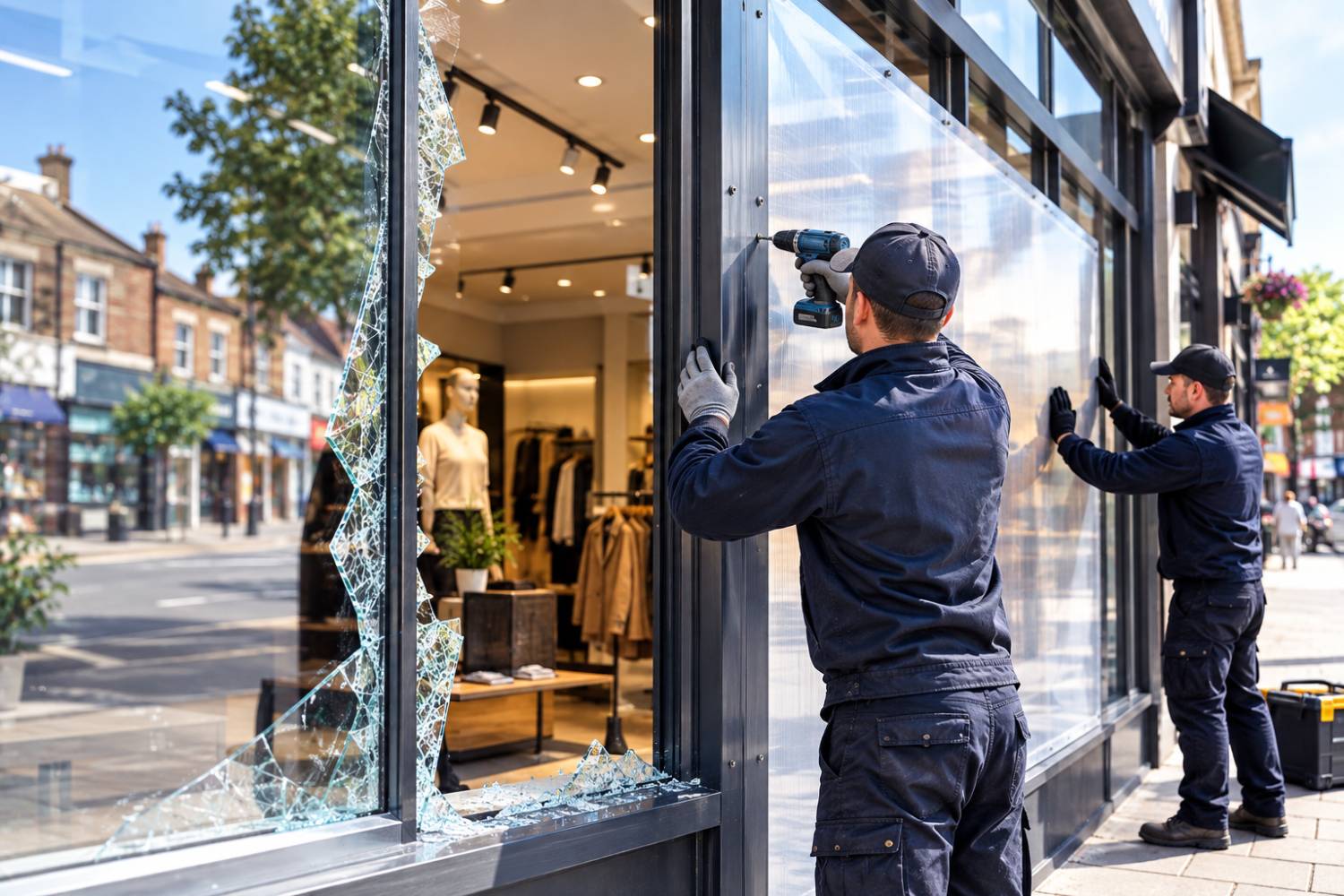
Where suitable replacement materials are available, the glazier may remove damaged glass and install a new pane. However, larger windows or specialist safety glazing may require additional preparation.
If immediate replacement is not practical, temporary boarding can secure the opening until permanent repairs are arranged.
How Same-Day Glazing Helps Retailers Reopen Faster
A quick glazing response can reduce downtime by addressing the safety and security issues preventing a shop from operating.
If the damage is relatively limited and replacement glass is available, repairs may be completed during the initial visit. This can help retailers restore customer access and resume everyday activities.
However, full glass replacement is not always essential for reopening. Secure temporary boarding may allow trading to continue where alternative access remains available and the premises meet relevant safety requirements.
The priority is ensuring the shop is safe to occupy rather than reopening before the damage has been properly assessed.
What Retailers Should Do Immediately After Glass Damage
Taking appropriate action before professional assistance arrives can help prevent injuries and further property damage.
- Restrict access: Keep customers and employees away from broken or unstable glass.
- Contact an emergency glazier: Explain the damage and whether entrances or security are affected.
- Avoid handling shattered glass: Leave hazardous fragments and unstable panes to trained professionals.
- Protect nearby stock: Move merchandise away from exposed areas where it is safe to do so.
- Document the damage: Take photographs and retain relevant information for insurance purposes.
- Report criminal damage: Contact the police where appropriate, particularly following a suspected break-in.
Providing accurate details about the damage helps the glazier assess the situation and prepare an appropriate response.
When Temporary Boarding Is the Better Option
Not every damaged shop front can be permanently repaired immediately. Large glass panels, unusual dimensions and specialist glazing may require materials that are not readily available.
Temporary boarding provides a practical way to secure exposed openings while replacement glass is arranged. It can help protect merchandise, restrict unauthorised access and reduce exposure to weather conditions.
However, boarding must not obstruct emergency exits or create unsafe customer access. Retailers should confirm that temporary protection is suitable before reopening.
Choosing the Right Replacement Glass
Shop front glazing must be appropriate for its location, dimensions and intended use. The correct specification depends on the installation and applicable safety requirements.
Toughened glass is designed to break into relatively small fragments, while laminated glass contains an interlayer that helps hold broken pieces together. Both materials are used in commercial glazing, but their suitability depends on the circumstances.
A qualified glazier can assess the opening, recommend appropriate safety glazing and check whether the existing frame is suitable for reuse.
Selecting the correct replacement helps maintain security, safety and long-term performance.
Common Issues That Can Delay Emergency Repairs
Although some shop front repairs can be completed quickly, several factors may affect the timescale.
Large or specially manufactured glass panels may need to be ordered. Damaged frames, door mechanisms or security fittings can also require additional attention before replacement glazing can be installed safely.
Access restrictions and unsafe surrounding structures may further complicate repairs.
Retailers should discuss these issues during the initial assessment and establish whether temporary protection can reduce business disruption while the remaining work is completed.
Keeping the Shop Safe After Emergency Repairs
Before reopening, retailers should check that damaged areas have been made safe and that customers can enter and move around the premises without encountering hazards.
Doors should operate correctly, escape routes must remain accessible and temporary protective measures should not interfere with everyday activities.
It is also sensible to keep records of repairs, replacement materials and incident-related expenses for insurance and maintenance purposes.
Where surrounding structures or security systems have been damaged, additional professional inspections may be necessary.
The Bottom Line
Emergency shop front glazing helps retailers respond to unexpected damage by addressing safety hazards, securing exposed openings and arranging suitable repairs. Same-day reopening may be possible when replacement materials are available or temporary protection allows the premises to operate safely.
Retailers should act promptly, restrict access to damaged areas and seek professional assessment before reopening. Choosing appropriate replacement glass, checking surrounding fittings and maintaining proper repair records can help restore secure trading conditions and reduce the likelihood of further disruption.