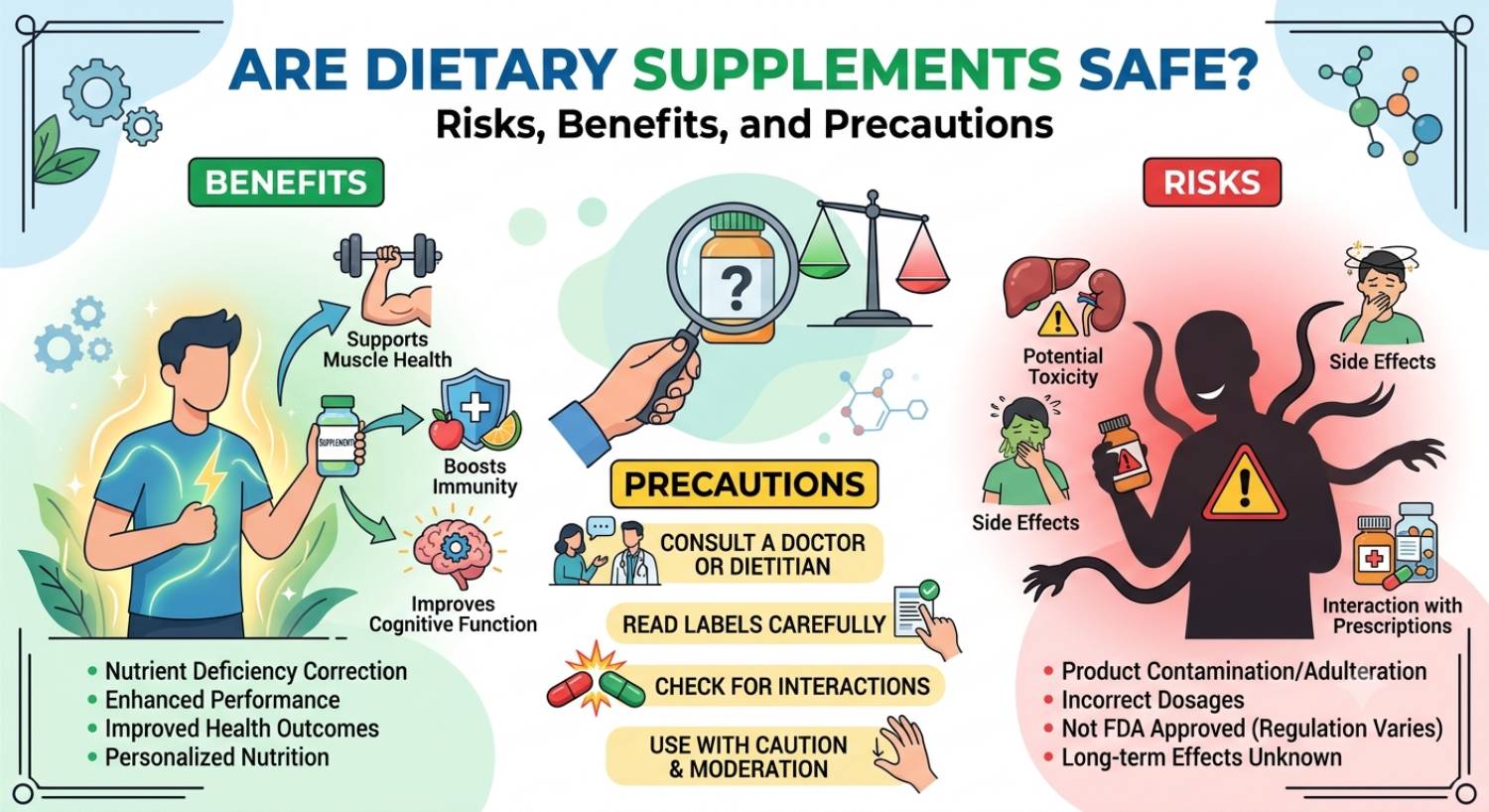
Dietary supplements are commonly used to support nutrition, address nutrient deficiencies, and maintain general health. They include vitamins, minerals, herbal products, amino acids, and other ingredients. Although some supplements offer established benefits, others have limited scientific evidence or may cause unwanted effects.
Understanding the potential benefits and risks of dietary supplements can help you make informed decisions and avoid unnecessary health problems.
What Are the Benefits of Dietary Supplements?
Dietary supplements can help people meet their nutritional needs when their diets do not provide enough of certain nutrients. For example, vitamin D and calcium support bone health, while iron supplements may be recommended for people with an iron deficiency.
People with restricted diets, certain medical conditions, or increased nutritional requirements may benefit from targeted supplementation. However, benefits depend on the ingredient, dosage, individual needs, and available scientific evidence. Supplements should not be assumed to prevent or treat diseases without reliable supporting research.
What Are the Risks of Taking Supplements?
Supplements can cause side effects, particularly when taken in excessive amounts or combined with other products. High doses of certain vitamins and minerals may be harmful, while herbal ingredients can interact with prescription and over-the-counter medicines.
Some supplements may also affect blood clotting, interfere with laboratory tests, or create complications before surgery. Products marketed as natural are not automatically safe, and some have been found to contain undeclared ingredients.
The U.S. Food and Drug Administration (FDA) does not generally approve dietary supplements for safety and effectiveness before they reach the US market. Consumers should therefore evaluate products carefully rather than assuming that every supplement has undergone the same testing as a medicine.
How to Choose Dietary Supplements Safely
A few practical precautions can reduce avoidable risks:
- Check the ingredients: Read the label, serving size, dosage, and warnings before purchasing a product.
- Avoid excessive doses: More is not necessarily better, and some nutrients can accumulate to harmful levels.
- Review medication interactions: Ask a doctor or pharmacist whether a supplement could affect your medicines.
- Choose credible manufacturers: Look for transparent labelling and independent quality testing where available. Certification can help assess quality but does not prove that a supplement is effective or suitable for everyone.
- Avoid exaggerated claims: Be cautious of products promising rapid weight loss, guaranteed results, or cures for serious illnesses.
Food Versus Supplements: What Should Come First?
A balanced diet should remain the foundation of good nutrition. Fruits, vegetables, whole grains, legumes, nuts, and other nutrient-rich foods provide vitamins and minerals alongside fibre, protein, and other beneficial compounds.
Supplements can help fill specific nutritional gaps, but they cannot replace the full range of benefits provided by a varied diet. Treating a confirmed deficiency is also different from taking supplements routinely without a clear need.
When Should You Consult a Healthcare Professional?
Speak with a qualified healthcare professional before starting supplements if you take prescription medicines, have a chronic condition, are pregnant or breastfeeding, or are considering supplements for a child. A professional can help determine whether supplementation is necessary and recommend an appropriate dose.
Seek medical advice if you experience an unexpected reaction after taking a supplement. Do not stop prescribed medication or substitute supplements for established treatment without professional guidance.
Conclusion
Dietary supplements can be useful when they address a genuine nutritional need, but their safety depends on the ingredients, dose, product quality, and individual health circumstances. Choose products carefully, verify health claims against reliable evidence, and discuss potential interactions with a healthcare professional. An informed, targeted approach is safer than taking multiple supplements without a clear reason.
Disclaimer: This content is for informational purposes only and is not a substitute for professional medical advice. Consult a qualified healthcare professional before taking dietary supplements.